
There’s a sign by my back door that says, “If I can’t take my dog, I’m not going.” Of course it’s meant to be humorous, but it’s more true than I care to admit. I am fortunate that as a trainer I can take my dogs almost anywhere. Not everyone is equally lucky. Let’s see if I can help you make plans for your puppy if you are forced to leave him home alone.
First of all, sorry, but don’t leave your young puppy in a crate for long periods of time. Your child needs food, water, attention, toilet breaks and exercise. A puppy should not be left alone for more than a few hours, a maximum of four hours, and even then you must have a safe and SAFE setup. If you’re at work all day, you need an alternative to leaving your puppy home alone.
Now we can discuss what that safe position may entail.
Are you ready to leave a puppy alone?
Before you bring your puppy home, be prepared for his arrival with food, toys, a crate, and perhaps an ex-run or safe area for the crate. If you are lucky, your breeder has already crate trained the puppy. Crating is a good way to keep your puppy safe when you are not home. If not, you’ll need to do some crate training.
Choosing a crate to leave a puppy alone
I have used both solid plastic and wire crates. I have a 5 month old Golden Retriever and used wire because that’s what I had. I was also home most of the time supervising. I think for most puppies, solid walls like you see on a sturdy plastic crate are safer and more cozy for a puppy.
I like to place the box in an ex-pen. This allows the puppy to sleep in a clean crate and pee, drink, eat and play in the larger space. I recommend placing a tarp on the floor and then placing puppy pee pads on top of it. Yes, these pads can break, so make sure your pup doesn’t chew or swallow the pieces. If so, you need an alternative.
An alternative is to have a pan in which the puppy can go potty. My breeders used alfalfa pellets or chips in the pan, creating a sort of litter box. Check with your breeder and use the same material if possible to create a similar environment. If you have a small room, such as a laundry room, you can create the same setup as the ex-pen, but make sure there is nothing on the floor or anywhere within the puppy’s reach. Take a look around your puppy’s environment to see what he can do when you are not home.
If you put a warm blanket in the crate, will your puppy chew on it and swallow dust? Then he won’t get a blanket.
If it’s a wire crate, could he get his foot caught in the wire? I used duct tape to close a gap when my pup slipped a small paw through a wire door.
Make sure your crate/ex-pen is not near an electrical cord, outlet, or anything else outside that it can reach. With puppies, if there is a temptation, they will go for it.
Leaving a puppy in an ex-pen
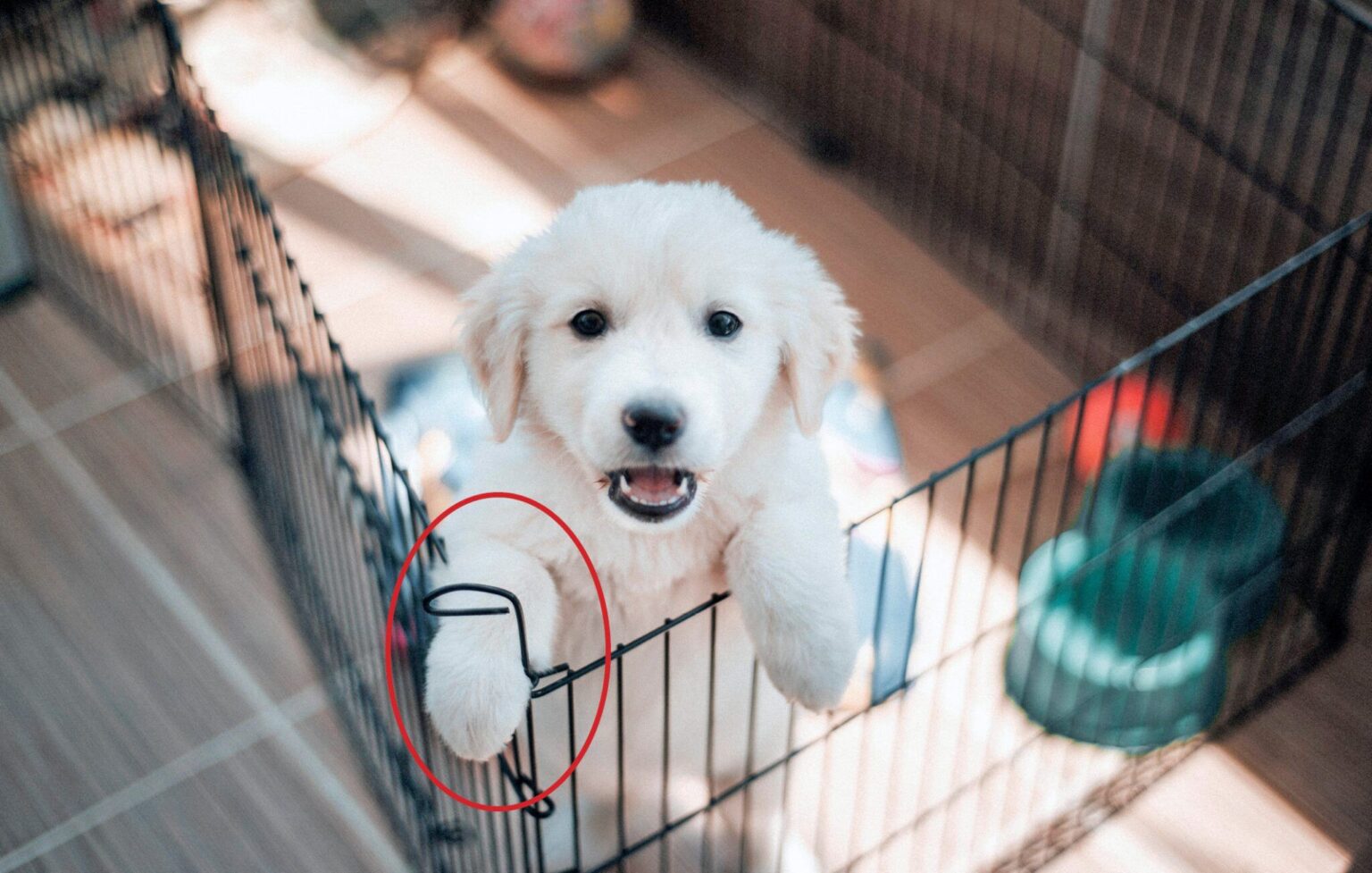
It took about a week for my Golden puppy to figure out that she could climb the sides of her ex cage. Luckily I had an ex-pen cap that I could snap on to prevent escapes. Keep in mind that what seems safe in week 1 may not be so safe in week 6.
I bought several cheap little cameras and placed them around the house. This allows me to check at home via my phone whether the canines are in order. There are all kinds of things that can be controlled remotely. You can even drop a treat into a crate when you’re not home!
So now that you have your pup safe and comfortable, it’s time to run an errand or go to work. Start for a short period of time so that your puppy gets used to you leaving and knows that you will return. Start by working around the backyard for an hour.
If you can, tire your pup out and he’ll be more likely to sleep while you’re away. Keep in mind that if your puppy has a big drink after play, he will want to relieve himself shortly afterwards, so you may want to take another trip outside before you leave.
If you must be away for several hours, leave the crate door open so the puppy can come out and meet some of those needs while in the ex-pen. Make sure your puppy has safe things to keep him occupied when you’re not home.
If you work all day, you will need to come home at lunchtime to care for your puppy. Or have someone come over and do the same. Perhaps a neighbor or a reputable dog walker can come visit. When I walk my friend’s dogs at lunch, I leave them with a treat that she had previously prepared and frozen. The treat – a safe one like a Kong – contains tasty things like canned dog food, pumpkin, peanut butter, yogurt, moist kibble, etc. By the time the puppy is done, he is relaxed and full and ready for a nap. And before you know it, mom and dad will be home!
Daycare for puppies
An alternative to having visitors come by is to register your dog at a dog daycare. They can be there for half or full days, and most have a puppy room for the youngest guests. Even two or three days a week can make a difference for an active puppy. Do your research, talk to other dog owners and trainers (and your vet), and find dog daycare that meets your needs.
It will help keep your puppy engaged and active when you are home. Make sure you use your time wisely when you Are At home. Sign up for an evening puppy training class or sign up for an online class and do it. You can do puppy training at night. Lots of age-appropriate exercises and enrichment games are a must for a puppy to grow into a happy, healthy dog. Time alone is not a dog’s favorite, but they learn to adapt and accept it when you put all the pieces in place.